"After silence, that which comes nearest to expressing the inexpressible is music." - Aldous Huxley
ayle’s Perks is located at 9028 Balboa Blvd, North HillsCA91325.It’s a tiny mom and pop coffee shop tucked away in the corner of a shopping center centered around an Albertson’s and a Wyler’s Delicatessen.And for several years in the early 21st century it was the hub of burgeoning local musical talent.It featured an open mic night that drew an audience from the surrounding area that was comprised of far more than just would-be singer songwriter musicians entertaining one another.People actually came to Perks to listen to what its open mic attendees were creating.
The names that recurred at Perks are not easily forgotten.Ben Jones, Aaron Miranda, Tom Washington, Bryan Chan, Mike Dill, Brooke Trout, Mark Brainard, Alex Schmauss, John Neira… the list goes on and on.Every one of these artists brought their musical conjurings to Perks every week to share what they had been creating, to get feedback for their efforts, to subtly hone their craft according to the constructive criticisms of their peers and an audience that was always appreciative but certainly discerning.
Many were the late evenings, special cup of Perks’ brew clutched in hand, that audiences of artists and connoisseurs enjoyed the musical performances of open mic attendees.Innumerable were the times that music of the highest order was consumed alongside Perks’ humble Panini and treat offerings…
But, as it seems all good things eventually converge to an end, ASCAP eventually caught up to this neighborhood mom and pop coffee shop that was not paying the appropriate dues to be featuring a weekly night of live music.Unable to address the requested fees on the part of the powers-that-be, the venue collapsed its open mic night and ceased to be a place where artists, musicians, and singer songwriters could share their creations with an appreciative community audience.
Undaunted by the bean-counters, however, the artists who regularly converged on Gayle’s Perks on a weekly basis have moved on to pursue their creations above and beyond the parameters of the beloved open mic night.Nearly every Gayle’s Perks participant has been preoccupied with the generating of musical projects that are completely worthy of note.Brooke Trout has moved on to a finely honed pop-rock project known as The Red Herring, Alex Schmauss has adapted his musical social commentary to the psychedelia of Alex & Alex, Aaron Miranda and Squeezebox Sam (yours truly) have invested their efforts in the neo-Americana Folk Punk sound of GRIT, Mark Brainard has invested his efforts in the rock n rollin’ Full Throttle, and Tom Washington has sculpted his Blue Lightning Review in his new home of Tehachapi, California.
On May 12th, 2011, Stephanie Antonio of Subculture Girl Productions, will give several of these Perks regulars an opportunity to have a reunion at LaBrie’s Lounge in Glendale, California.The “Get Off The Couch Thursday” event that Stephanie has secured will showcase current projects from Brooke Trout, Alex Schmauss, GRIT, guitar virtuoso Richard Marchetta, bluesman Brian Chan, and American rock and roller Tom Washington.This will be the first time all of these artists have been given the opportunity to be in one place at the same time, sharing their unique musical visions, in nearly five years, and this collection of local singer songwriters and music makers is not to be missed.
The facebook invite for this event can be accessed here:
ASCAP tried to turn these artists’ creative environment into a monetary issue and, in light of the mom and pop nature of the venue, they succeeded in robbing them of a place to share their creative endeavors.But all these great music makers have moved on to projects that could never have been were it not for their fellowship at the Gayle’s Perks open mic night.Come out to Subculture Girl Productions’ “Get Off The Couch Thursdays” at LaBrie’s Lounge in Glendale on May 12th to experience what these creative entities have been wrangling into existence in the years since Gayle’s Perks ceased being able to provide a place for them to gather. The doors open at 7:30pm and it's only 5 dollars! What better deal could you get on a Thursday night in Los Angeles for five measly dollars?
And, in the meantime, visit Gayle’s Perks for a cup of coffee or a fantastic Panini.
"I had a front row seat to hear ole Johnny sing." - Shel Silverstein
merican Recordings by Johnny Cash arrived in 1994, produced by Rick Rubin as the first release of his newly renamed record label.I was no stranger to Johnny Cash (I can blame that on my parents and older siblings), but the album did appear at a time when I was finally making music my own and I absorbed it eagerly and wholly.Probably the most important aspect of that record-release was the tour that accompanied it, enabling me to see Cash live at the Hollywood Pantages Theater.I don’t know that there are words to describe the fondness I have for that memory, even though I got a second opportunity to see him live when The Highwaymen toured for their last album a year or so later.But they were both events fated to not repeat themselves and I feel very fortunate to have had the experience.
But, despite it being Johnny Cash’s birthday, it isn’t really The Man In Black I want to lay some accolades on.There are many who will do that today and my voice would only be lost in the shuffle.Who warrants a listen to some accordion-squeezing hack from the San Fernando Valley when every accredited music critic, music historian, and venerable musical personality has something to say on the same topic?Nah.Everyone knows how I feel about Johnny Cash.I will let the masses say their part.Who I want to spend a moment talking about is Beck.
Yeah.Beck.That guy who musically defined the modern era of hipsterdom with classics such as “Loser”, “The New Pollution”, and “Where It’s At.”What the hell does Beck have to do with Johnny Cash?Well, Beck opened for Johnny Cash at that Pantages show so long ago.Even at the time the pairing was unprecedented.I remember friends being surprised when I told them who the opening act was indicated to be on the ticket.Even my eclectically inclined contemporaries were hard pressed to see the connection between Beck’s renowned frenetic, yard-blower stage antics and the perceived hallowedness of Johnny Cash.
My thirteen years senior older brother, a Johnny Cash diehard, reviled the thought of the pairing when I explained to him who Beck was and played some music for him.He even went so far as to suggest that we arrive late enough to the show as to miss the opening act, but my cajoling won out.
Anyone who knows Beck’s live performance (at least in the mid-1990s) reputation should have no problem comprehending my puzzlement over the pairing.But it was a puzzlement that was unwarranted.Instead, it was one of those instances where the Powers-That-Be should have been trusted.
Beck came out alone.Clad in a nondescript western shirt and weathered boots and armed with an undecorated steel bodied guitar he proceeded to render his own versions of what he verbally labeled “bad ass songs” for a hushed, and assuredly surprised (if not awed) audience.Beck’s “bad ass songs” were tunes out of the songbook of Americana, traditional tunes a century old with lyrical content that raised the eyebrows of the listener who believing in the premise that the past was innocent and plagued by fewer societal complications and problems than this supposedly downward-spiraling modern world.Songs about murderers, drug abuse, crushed dreams, and questionable repute from bygone eras flowed from Beck’s pickin’ an’ strummin’ fingers and searching voice.At one point he brought out a dobro player and a snare drummer and did a couple tunes as a trio, and in an inspired moment he blared a ditty through a harmonica fed through the tiniest and scratchiest of amplifiers, stopping to sing verses and chorus accapella before resuming his hearty huffin’ an’ puffin’.
For nigh on 40-some odd minutes Beck continued with this very un-Beckish performance.Then, amidst a tune he was carving out on the steel bodied guitar, a string break loudly resonated through the pick-up and out into the theater’s acoustics.There was a muffled “Shit” under Beck’s breath, then an apology, a regretful farewell, and a thank you to “whoever it was that booked me for this gig.”
And then he was gone.Johnny Cash delivered after that.The man was everything you could have imagined he would be, a stage presence so overpowering and commandeering that there was absolutely no stage show necessary to hold that audience riveted.The reverence held through the opening set with his band, through his just-me-and-my-guitar set in the middle of the show, and through the filmstrip-of-crashing-locomotives-accented Orange Blossom Special encore.
But even coming away from that night with the euphoric “I can’t believe I just saw Johnny Cash” mindset, it was hard to shake Beck.My perception of his music had been changed forever.Odelay! made sense on so many more levels than it had before, and the appropriation of such traditional tunes as “One Kind Favor” into his following album experimentations came as far from surprising.
When I look back on where the inspiration for Squeezebox Sam and any of the musical projects I’ve fooled with birthed from, there are the usual suspects such as being raised in a musically-versed family, permanently borrowing Lomax books from the public library, and hearing Gordon Gano’s “Mercy Seat” side project on a mid-morning independent radio broadcast.But I would be a liar if I did not include that Beck performance in the list.His offbeat stint truly inspired me to look at those beloved antique tunes in new ways.I, too, thank whoever booked him for that “gig.”
- Squeezebox Sam
Here's the variety review link fer that show so long ago:
"File under sacred music." - blurb from The Cramps' Songs the Lord Taught Us album art
y doom was to be minorly eclectic.
There just wasn’t any way I was going to avoid it.I grew up in a house with parents who were fairly music-adept.My mom was 18 years old in 1954.I have a box of original 45s from Sun Records and Chess.Hank Williams multi-disc 45rpm sets.Chuck Berry’s “Deep Feeling”.A deeply grooved Gene Vincent.Even a Cameo of Charlie Gracie’s “Fabulous”.All artifacts from my mother’s youthful musically-inclined ear.
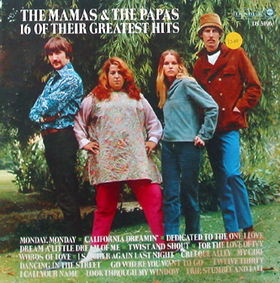
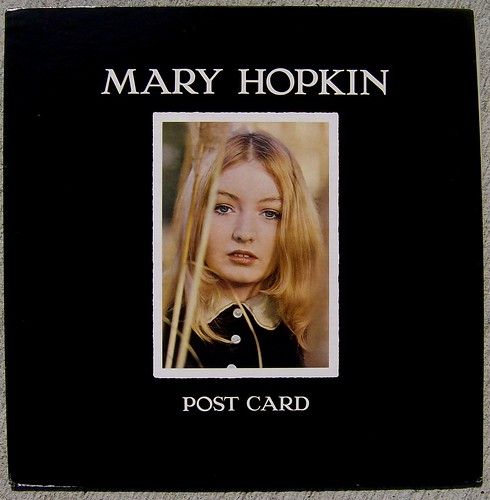
But my parents never stopped acquiring music (mostly records) for most of their 54 years (currently) together.By the time I was old enough to peer up at the shelves and shelves of records that spanned the walls of the living room in my parents’ house they had delved into nearly every modern genre, from the American song book to standards to jazz and vocals to country and folk and what I would spend a large part of my youthful days disparaging as “hippie shit” (Mary Hopkin, The Mamas and the Papas, Peter, Paul & Mary…).I even acquired my first Ken Nordine record out of my parent’s collection, but that’s another story.
Certainly my parents were too old to be inclined to follow post 1970 musical developments, and they were never Beatles, Led Zeppelin, nor post-1963 rock n roll people, so there was a cap on the breadth.But I’m not going to complain.Imagine thinking about trying to ingest that wall of music.What was it all supposed to mean?Who the heck was this Guy Lombardo guy?Who was Harry Belafonte?What does this mean, Handel’s Messiah?How is Handel’s messiah any different from that one they talk about in church?What are American Railroad Songs and why should I be interested in them?
It was also challenging that my brother, fourteen years my elder, became an avid record and music collector as well.Also not a fan of the acid-rock revolution he was born into, I owe him for a continual dosage of Johnny Cash, Hank Jr., and Gordon Lightfoot.
And my sister?Seven years my senior, my sister lived Martha Coolidge’s Valley Girl.I owe her for exposure to the birthing throes of KROQ, second wave ska, The Stray Cats, the resurrection of my mother’s dust gathering 45s, and a worn out Depeche Mode cassette.Then she graduated high school and dragged hip-hop into the sonic menagerie I encountered on a daily basis.
So I did what any good kid who was immersed in this veritable cornucopia of musical opportunity would do.I started listening to gangsta rap.
Actually, that’s not quite the truth.When I first determined that I would come into my musical own, I turned on the clock radio in my room that had never uttered a peep except to klaxon me into wakefulness in the morning.The one thing I found that was different from all the offerings in my home was classical music.I don’t even remember the station. It was somewhere way down on the left hand end of the dial.It may even have been AM for all I remember.But it was different, and in light of the rest of these music purveyors inhabiting my living space, it was mine.
So I listened to classical music. I didn’t know the composers.The complicated titles of the compositions meant nothing to me.No attention was paid to this orchestra or that orchestra or such and such a conductor.But that’s what was in the background of my homework and model-building and whatever else I accomplished in my room as an adolescent.I don’t know what my family thought of it.Perhaps they thought it was odd.Maybe my parents thought I would grow up to be “cultured” or something.I don’t know.I don’t recall anyone ever commenting on it.
Then, one day, one of my sister’s boyfriends gave me a copy of Sir Mix-a-Lot’s “Swass”.I apparently approved, because then he loaned me NWA’s “NWA and the Posse” and Ice T’s “Power”.Being the logical individual I am, I was of course curious about the Intro and Outro tracks of “Power”, so along came Ice T’s “Rhyme Pays”.
So then I listened to classical music and gangsta rap.
And that’s pretty much the way it went for me all through middle school and into high school.My headphones were pumping one of two things into my ears… something akin to Wagner’s “Ride of the Valkyries” or something like Eazy E’s “Eazy Duz It”.I don’t really have an answer for the appeal of gangsta rap as a genre to a middle class white kid from the San Fernando Valley.I certainly wasn’t much of a rebellious type.For whatever reason, it just clicked.Somewhere along there I also acquired an interest in film music, probably via the renditions of Wagner used in Boorman’s “Excalibur”, but ultimately it was probably because it reminded me of classical.
Then, in 10th grade (back then, high school started with 10th grade), someone pressed a cassette tape into my hands with instructions to listen carefully.This was an album called “Disintegration” by a band called The Cure.I vaguely remembered seeing a Cure shirt on a guy in middle school.But this guy was also a devoted Beatle-maniac and talked continually about GREASE (the musical).I didn’t know what to expect.But I listened to it.
To say that it put a speed bump on my classically gangsta rap highway would be sort of an understatement… but to say that I didn’t like it would be a lie.It intrigued me deeply, actually.I don’t know if I was aware of it at the time, but in looking back I can understand that there was enough of a musical connection between spoken word numbers like “Lullaby” and my rap/hip-hop leanings to create a stamp of approval.But atmospheric songs like “Untitled” were classical-ish and soundtrack-ish enough to also retain validity.In short, I realized I had a new musical strain to delve into.Several times I fell asleep and awoke to that album, the flip and reverse cycle on the walkman working overtime through the night.
Don’t let it be thought that at any time I despised or rejected the musical heritage my family imbued me with.I was always cool with whatever it was that my brother or sister or mom or dad was spinning (except maybe my dad’s propensity for Carly Simon and Carol King… I just never could abide by them).But, as most youth probably do, I was looking for something to call my own.What ended up happening, however, was I ended up with what seemed like a plethora of disparaging musical strains that didn’t seem to make sense together.
And so it went.The collecting of this and that into my musical interests until everyone thought I was just too strange in my musical leanings.My sister was fine with Tony Tone Toni, but wouldn’t return to the Depeche Mode she had dumped on me years prior.My brother was fine with Johnny Cash, but could I please turn off that Dead Can Dance stuff?Dad was fine with Tiny Tim, but Run DMC was not going to be okay… ever.
To further complicate matters, late one night I came across the late great Warren Kolodny’s “Stay Awake” program on KCRW.His guest DJ that fateful night was none other than Byron Werner, purveyor of all things Juan Garcia Esquivel and what he coined as “Space Age Bachelor Pad Music”.I was instantly enraptured by this complex, hard to pigeon-hole mid-century lounge music.Sure, my parents had the standard Ferrante & Teicher quotient and the smattering of the Rat Pack, but their collection did not dig as deep as Alvino Rey or Esquivel.I was caught up.
Much to the chagrin of those who associated with me, I was then on a rampage of mid-century instrumentalism.Orchestral lounge music, surf, and instrumental rock made certain that no one ever wanted to ride any distance with me in my car.Except my cousin Sean.Also an investigator of the odd and off-beat he seemed to get it.But we were in a lonely understanding.
But still there did not seem to be a thread of uniformity in my listening pleasures.I was resigned to the fact that I was just a musical weirdo… too eclectic for my own social good.Then one day a friend pushed a couple CDs into my hands.He said, “Here.Since all you’ll listen to is that guitar instrumental stuff, you will probably like this.”The CDs were a copy of The Cramps’ “Bad Music for Bad People” and a combo disc of their EP “Gravest Hits” and the seminal “Psychedelic Jungle”.I expect it was his hope to shake me back into some semblance of tolerability.
And it did shake me up.There was a dramatic affinity in me for The Cramps from the first time I spun those CDs.And it wasn’t necessarily that they were anything “new”, per se, but they were certainly “out of the ordinary”.I identified that punk-goth-weirdo rocker aesthetic instantly… but what really fascinated me was that, despite the fuzz and the grind and the ooze and the moan and groan and snarl, I recognized that music as crawling from the records on my parents’ wall.Those 45s and LPs of my mom and dad’s, as well as my brother, had been dragged through the tapes and radio of my sister’s and those of my own youth, and out had popped The Cramps.
In those recordings there was an identifiable but indescribable link between everything I had been indoctrinated with musically while growing up.It contained the delirium of psychedelia, the brute force of punk, the forlornness of country, the desperation of the Delta, the lyrical recital of hip-hop, the innocent double entendre of rock n roll, the atmospheric repetition of electronic and industrial, the misery of Gothicism, and the illumination of the cathode ray, all wrapped into one aggressively complex offering.Lux Interior and Ivy Rorschach had groped back into the American musical psyche that had been buried by Beatles-mania and dragged it, kicking and screaming, into the latter 20th century.They bathed it in the taboo and rubbed musical America’s face in the discarded and forgotten heritage.And while it might be words of blasphemy to some, it was not the original material of The Cramps that really shined for me.For me, it was the way they reinterpreted the material of yesteryear with their own indelible stamp that was truly a mark of mastery.So well did they do this, in fact, that it was a fair amount of time before I knew that they weren’t just creating 100% music in the spirit of Americana ground up in a garage rock in-sink-erator.I remember the first time I heard Ronnie Dawson’s original “Rockin’ Bones”, or Roy Orbison’s “Domino”, or Jack Scott’s “The Way I Walk”, and said, “Wait… that’s not a Cramps song??What?!?”
You see, The Cramps had a way of culling through the obscure and finding the overlooked yet valuable, feeding it through their own creative meat grinder, straining it through the post modern musical mentality, and unleashing it again upon an unwary and unsuspecting audience.It makes me sad when I think of all the Hasil Adkinses and the Charlie Featherses that I may not have encountered in my musical journey had it not been for the vigilance of Lux Interior and his musical cohorts preserving them for me.And yet, they preserved the legacy of American music in such a personal manner that it also revealed the interconnectedness between so many seemingly disparate musical stylings.“Yes,” The Cramps seemed to always imply with each ground out chord and soulful yowl, “it really is all just the blues.”Later on down the road, this implication that I learned from The Cramps seemed solidified by learning that such seemingly far ranging artists as Hank Williams, Martin Gore, Alan Wilder, and Jimi Hendrix collected and drew inspiration from blues, hot-jazz, folk, and old timey musics.But it was that introduction to The Cramps that I look back on and see as the moment that I realized it all made sense.
With the second anniversary of Lux Interior’s untimely death approaching (he gave up the ghost on February 4th, 2009), I find myself glad that I had the opportunity to see them perform twice in the twilight of their twenty-some-odd year career.Once at the 2004 Hootenanny and a second time at Sunset Junction in 2006.I remember they headlined the Sunset Junction show, the last act of the night to grace the main stage, and the LAPD shut down the event just before Lux had the opportunity to shed his pants.It was almost as if they had been waiting for the moment.Some people have no sense of theater.
The Cramps.I owe them the recognition of being the source of coherence amongst my varied and divers musical interests.And while I doubt I would ever be inclined to rub my family’s nose in them, I also thank The Cramps for focusing an appreciation in me for the many colored musical umbrella I grew up under.Most of all, though, I give them credit for teaching me to dig deeper under the musical surface than I may ever have been inclined to do on my own.
Thanks, Lux, for not letting the music die.
Thanks, Andy, for jamming those Cramps CDs into my hands all those years ago.
“There have been a lot of tough guys.There have been pretenders.And there have been contenders.But there is only one King.” – Bruce Springsteen
ith his birthday havin’ just passed by an’ havin’ even more recently finally committed my anti-Beatles diatribe to print, I find myself contemplating The King.
What is there that can be said about Elvis Presley?Folks worship him.People abhor him.People spin wild, unlearned yarns about the man.Some are even just plain agnostic towards the whole premise.
For most of the young world today it seems that Elvis is almost sort of a cartoon.He seems more like Mickey Mouse than a historical, real-life, flesh and blood human being.The Dead Milkmen, at the height of their powers, even parodied Goin’ to Graceland with “… if this were Disneyworld I’d buy a pair of Elvis ears…”But if you had to explain to someone why he is more than that, explain his importance in the big picture, what is it that you would say?Why should anyone anymore bother taking note of Elvis Presley?
Perhaps because he was a gigantic contributor to changing the way America thinks about music.Perhaps because, in a time blemished by racism and segregation and hatred, he unashamedly appropriated the stylings of Black American music and heralded them as an important contribution to the development of the 20th century western world.At a time when the Grand Ole Opry refused to acknowledge the existence of drums and Pat Boone was attempting to correct Fats Domino’s grammar in his cover of “Ain’t That a Shame”, Elvis Presley lauded the songwriting and music making of his Black influences so earnestly that he refused to be finished rendering his versions of their songs until he believed he had communicated every nuance of the originals he treasured so preciously.
Amidst the tumult of the advent of rock n roll in mid century America, Elvis Presley stood tall and never shied from the fact that he valued the vibrant, effervescent, rollicking musical stylings of Black America every bit as much as his old country European musical roots.Elvis really saw the music as the voice of the youth.He saw it as the soundtrack to the messages he memorized James Dean communicating from the silver screen.He shook his hips and crooned and hammered his guitar for Sun Records and RCA, and then he seamlessly sewed it all together in his portrayal of disenfranchised young America in “King Creole” in 1958.
And then he went into the Army, and when he came back, he wasn’t the same.You see, in mid-twentieth century America, rock n roll was dangerous.Just as black music, despite its centuries of interweaving with Eurocentric musical stylings in the “New World”, seemed to always have been considered, in and of itself, dangerous.Attribute to it fear of interracial commingling (or worse yet, interracial sex!), fear of moral erosion, or just plain fear of the unknown; whatever reasoning can be assigned, it still points to a fear of rebelliousness to be potentially instilled in America’s youth via the race recording.And apparently no one recognized this rampant fear better than Elvis’ Colonel Tom Parker.But more than recognizing that his meal-ticket was playing in hot water, Parker realized that if there truly was a would-be moral backlash coming down the road against rock n roll, and particularly its white heraldry as embodied in Elvis Presley, then he would no longer be counting his deposit receipts from the bank.So, while Elvis cooled his heels doing his patriotic duty and punching the card for Uncle Sam, Parker hatched a detour to preserve the financial potential of the young rock n roller.
That detour was pop.By the time Elvis got out of the army, The Colonel had prepared a yellow brick road to the financially lucrative middle ground of pop music.And while the early 1960s moral brigade went to work full time against the ills of rock n roll as the Great Satan, Elvis was spirited away into a decade of musicals, comedy, and middle of the dial radio safety.Gone was the edgy young man who out James Deaned James Dean in King Creole.
But this transformation was not exactly detrimental to Elvis.While the Beatles were having the red carpet rolled out to them, four white Brits with no connection to the American South who were solving the race record issue for the record industry and burying American music in the process, Elvis Presley was solidifying his musical reputation by developing a catalog that would far outbreadth any of his contemporaries and certainly challenge many artists to come after him.He cut his teeth in rock n roll, but he moved on to rally virtually every other musical styling into his repertoire, and the results were never failure.His two and a half octave voice and his profound respect for the dreams and history entailed within the art brought every aspect of the musical experience under his power.
Except songwriting.Yes, Elvis was never a songwriter.In his quarter century career, it is pretty much accepted that Elvis Presley never wrote a song.Somewhere there is a label that has his name on it, sharing credit with a handful of other individuals, but it is generally understood that this one credit was honorary rather than indicative of a creative contribution.Yet it should be acknowledged that it never seemed to be Elvis’ intention to be a songwriter or lyricist.His focus always appeared to be in the performance itself, as if the presentation of what he chose as important to communicate were more important than anything else.Elvis holds no place on the shelves of the mighty lyricists and verbal poets and songwriters that crowd the history of American music, but as a performer he is untouchable.From his earliest toyings at Sun Records to the rhinestoned flash and tumult of his Vegas aristocracy, it is Elvis the PERFORMER that has always been the focus.Elvis the Renderer, not Elvis the Creator.And the man always showed a powerful talent for choosing the material and fabric of the musical world that he knew he was best able to sew up into infallible performance.
There are few individuals in the history of American music who have caught and maintained the attention of the listening and observing populace like Elvis Presley.His presence permeates American, and world, culture.Whether he is being revered or he is being mocked, the fact is undeniable that he is not ignorable, even now, nearly 35 years after his death.Elvis has left the building, but the brand he left upon us, love it or hate it, is still raw and fiery.And history since Elvis keeps bringing us individuals to exemplify his still yawing influence.
Take Michael Jackson.Michael Jackson apparently had such a profound enamorment with Elvis Presley that not only did he blatantly and proudly incorporate The King’s movements into his dance routines and declared himself “The King of Pop”, but he married the man’s daughter!Michael Jackson is one of the great personas to imprint world musical culture in the latter 20th century, a fantastic performer AND singer/songwriter, but how much of who he sought to be and who we allowed him to be was rooted in the legacy of Elvis?
I have a friend.His name is James King… or Ghassan, depending on how well you know him.He is Lebanese.He immigrated to the United States illegally as a teenager in the 1990s to become an Elvis impersonator.
Yes, you read that right.Ghassan, or James, has an interesting tale.It is really best to hear him tell it, but I will recount it here because it is good support for my premise of the continuing significance of Elvis Presley.Ghassan grew up in Beirut, and as a boy he was a gigantic Michael Jackson fan.Even in the war-torn and anti-American 1980s, Michael Jackson and disreputable American culture could not be kept out of an apparently relatively worldly and cosmopolitan place like Beirut.And Ghassan was such a Michael Jackson fan that he knew all the lyrics to his songs, although he could not speak English, and no one in Beirut could replicate the King of Pop’s dance moves with more accuracy.
One day, however, Ghassan was walking through downtown Beirut accompanied by his elder sister.Suddenly, Ghassan found himself staring up at the plate glass window of a music shop.Or, more specifically, a poster that was hanging in said window.It was a poster of Elvis Presley.!950s Elvis Presley.Young, virile, red jacketed, standing on the toes of his shiny black shoes, glossy hair swept back, a few stray strands caressing his forehead.
In awe, Ghassan looked up at the hypnotizing image.“Who is that?” he inquired of his sister.
“Oh, that’s Elvis Presley, an American rock and roll star,” she responded.
“Is he better than Michael Jackson?”
As Ghassan tells it, his sister smirked down at him and said, “Oh yes, he’s the KING of rock and roll.”
And thus began the quest to find something, ANYTHING Elvis in the confines of Beirut.Despite the availability of Michael Jackson, finding something Elvis was not such an easy task.But eventually find it he did.An old, worn cassette tape in a box in a second hand shop.And Ghassan took that cassette home and poured over it, listened to it, learned it, mesmorized every word… although he did not speak English… and after achieving a level of mastery he would perform for his friends, singing along to “Tutti Frutti” and swinging a tennis ball racket in approximation of a guitar.
And then on to America.Ghassan dodged the mandatory Lebanese draft, overstayed a student visa, became James King, and pursued the American Dream as an impersonator of the King of Rock and Roll.Visiting family was difficult due to the fact that his dodging of the draft was a crime punishable by imprisonment if he ever returned to Lebanon, so they would rendezvous in the UAE at his sister’s home.One such occasion coincided with 9/11, however, and he could not return to the United States without going through the legal paperwork.But he did.And he is still here.James King.Entertainer.Elvis.
A couple summers ago, my friend Keefe (who some of you may know as The Omen O’Brien) and I made a pilgrimage across the United States via I-40.Our ultimate destination was Nashville, but we also paid our respects in Memphis at Sun Studios and Graceland.Troublemaker that I am, and despite my adamant respect for Elvis (which is an oddity, considering that I am not that much of an Elvis man, myself), I bragged to Keefe a great deal about how my intention was to be thrown out of Graceland.I mean, think of the notoriety!Being thrown out of Graceland.Heh.
Well, as can be expected, I didn’t get too far in my scheme.I made some off color commentary while waiting in line for the shuttle and then, while on the shuttle, the driver announced the various locales of Graceland we would be seeing on that particular tour.One such site was Elvis’ private racquetball court.To this, I retorted, “Awesome, we’re gonna see where the King whacked his balls!”
I don’t know how to explain it exactly, but an immense guilt came over me at that moment.It is hard to describe, but at best, it was as if there was some kind of moral or ethic code my conscience was warning me that I was breaking, and I could not go forward.It was almost as if I felt like I was being un-American.And I fell quiet, all intentions of causing a security-call-grade disturbance fleeing away.
If there is one thing I came away from Graceland with it was an impression of what I can only define as the “modesty” of Elvis Presley.Having never been to Graceland, seeing it only in pictures my whole life, and not having much for reference, ultimately I was impressed with the sheer smallness of it all.Sure, it’s a big house by the standards of your everyday Levittown suburb, but it is not a mansion in the sense of the word developed for us by this era of MTV Cribs.Here was this young man, with more money than he knew what to do with, and instead of commissioning some palatial structure to be built to some exacting standards of his own, he bought an antiquated, modestly large home and dwelled happily in it.Sure, entering through the front door, you are confronted by his legendary 50 foot long couch… but it barely fits in the room.And it is ALL there is in the room.And opposite that is a dining room, surely elegantly (perhaps garishly to some) decorated for entertaining, yet inhabited by a table set that my own family would be hard pressed to gather around without rubbing elbows.And likewise is the experience throughout the house.Certainly it is evidenced that the man had an immense amount of wealth to spend, and the tacky glitz typically associated with wealth abounds, but it is all contained within a home that never elicits a feeling of being anything more than just that, a home.
Elvis is not an easy subject to tackle.As with any human being, and magnified in complexity by fame and assumption of a larger than life identity, it is hard to sift through all the grains and know exactly where you should stand.There can be no denial that Elvis loved America, but the excess that it brought him seems to almost have consumed him with a voracity that could equal only his own rapid amplification as a giant personality.Bruce Springsteen put it very eloquently when he stated that Elvis “… was as big as the whole country itself, as big as the whole dream.He just embodied the essence of it and he was in mortal combat with the thing.”
Late in his life, huge and distraught, addicted to grilled peanut butter and banana sandwiches and prescription medications, it is not hard to imagine Elvis comparing himself with the once vibrant, unpredictable young man he started out as and finding himself wanting.Just as Elvis was the great initial experiment of drug therapy, doctors prescribing him this or that and some of those in response to his complaints of ailments, he was also America’s first great experiment with mega-stardom.America injected itself into Elvis Presley, inflating him with all its hopes, dreams, self-perceptions, and responsibilities.In that swelled accountability, as pointed out by Springsteen, Elvis lost sight of himself, lost sight of that truck driving mama’s boy, lost sight of his own American Dream in favor of America’s Dream.In turn, America lost sight of Elvis the man and incarnated Elvis the deity.No amount of valiant battle on his own part could have delivered Elvis Presley from the cross of martyrdom America has crucified him on.
Think of Elvis as kitsch.The novel, “those were the good ole days” object of adoration.What is the ultimate kitsch Elvis object?The Elvis velvet painting, finally denoted as a “Velvis” in the late 20th century.Gary Vikan, director of the Walters Art Musuem, wrote in a series of posts that Elvis on velvet goes far beyond the apparent kitschy association and is rather a manifestation of iconography.He points out that the velvet painting, in spite of “naked women and unicorns”, is an art form of “tears”, dominated by “charismatic martyrs” with Elvis Presley and Jesus Christ at the top of the list.It is this “thorny crown” that Vikan declares Elvis has handed down to those who have come after him.
Many modern songwriters and musicians, standing in the ever lengthening shadow of The King and no doubt trying to decipher their place in that puzzle, have written of the complexity and confusion the topic of Elvis Presley has left the modern world with.In the Byrom, Monty, Kimmel penned tune, Elvis on Velvet, presented to us by The Stray Cats on their final album in 1992, examines the parody of merchandising Elvis Presley has become and how it is likely he would be disappointed with the deification laid upon him.
Elvis on Velvet (Byrom, Monty, Kimmel)
All night long way, black top highway, midnight, hittin' a groove
Mustang, radio, rag-top, jukebox, Hound Dog, Don't Be Cruel
Roadside rest stop, all night truck stop, sideshow out of a van
Rhinestone lunchbox, ashtray, junk shop, key chain, hittin' the fan
Elvis on velvet - don't know why it makes me blue
Elvis on velvet - it's got a strange effect on you
Elvis on velvet - somehow it makes me mad
Elvis on velvet - and I can see him tonight up on the road ahead
Well, drift back, daydream, Memphis street scene, 1955
Street flair, flat-bed, three piece string band, shakin', man alive
Then Heartbreak Hotel, Jailhouse Rock, Love Me Tender please
I'm All Shook Up, too much, so Treat Me Nice and Wear My Ring
Elvis on velvet - don't know why it makes me blue
Elvis on velvet - it's got a strange effect on you
Elvis on velvet - somehow it makes me mad
Elvis on velvet - and I can see him tonight up on the road ahead
Well, Graceland, wasteland, right this way ma’am, one low price to pay
His life, his love, his home, his stuff, his final resting place
Thy kingdom come, thy will be done, thy records re-released
All kneel to second guess and bless him, let him rest in peace
Elvis on velvet - don't know why it makes me blue
Elvis on velvet - it's got a strange effect on you
Elvis on velvet - somehow it makes me mad
Elvis on velvet - and I can see him tonight up on the road ahead
More recently, Bono, from larger-than-life rock band U2, worked with Howie B and Brian Eno to create an eccentric album of musics under the band name The Passengers.On this album is Bono’s exploration of the Elvis Presley question, titled Elvis Ate America.
Elvis Ate America (The Passengers)
Elvis... white trash
Elvis... the Memphis flash
Elvis... didn't smoke hash
Would've been a sissy without Johnny Cash
Elvis... didn't dodge the draft
Elvis... had his own aircraft
Elvis... having a laugh
On the Lisa Marie in a color photograph
Elvis... under the hood
Elvis... with Cadillac blood
Elvis... darling bud
Flowered and returned to the Mississippi mud
Elvis... ain't gonna rot
Elvis... in a Memphis plot
Elvis... he didn't hear the shot
And Dr. King died just across the lot from...
Elvis... vanilla ice cream
Elvis... girls of fourteen
Elvis... the Memphis spleen
Shooting TVs reading Corinthians 13
Elvis... with God on his knees
Elvis... owned three TVs
Here come the killer bees
Head full of honey potato chips and cheese
Elvis... the bumper stickers
Elvis... the white knickers
Elvis... the white nigger
Ate at king burger and just kept getting bigger
Elvis... sang to win
Elvis... the battle hymn
Elvis... the battle to be slim
Elvis ate America before America ate him
Elvis...
Elvis... stamps
Elvis... necromance
Elvis... fans
Elvis... sycophants
Elvis... the public enemy
Elvis... don't mean shit to Chuck D
Elvis... changed the center of gravity
Made it slippy
Elvis... Hitler
Elvis... Nixon
Elvis... Christ
Elvis... Mishima
Elvis... Markus
Elvis... Jackson
Elvis... the pelvis
Elvis... the psalmist
Elvis... the genius
Elvis... generous
Elvis... forgive us
Elvis... pray for us
Elvis... Aaron
Elvis... Presley
And the list goes on.As much today as ever it seems that Elvis is still a hot topic of discussion.While much written about him seems to lay the crime of the robbery of rock n roll from the black man at Presley’s feet, as smartly exemplified by Chuck D’s notorious commentary and In Living Color’s “Elvis is Dead”, it can be strongly argued that The Beatles are the real culprits of this heist.The Beatles, however, in their evolution as near perfect Greek tragedy, garner much sympathy from the modern world.But Elvis Presley, likely as a result of a serious lack of introspection on the part of America itself, is often played out as a pathetic joke rather than the complicated entity he is, permitting an easy disregard and vilification.
Regardless of stance, however, it is evident that we are likely in need of accepting the fact that Elvis is here to stay.In the near six decades since Presley became Sam Phillips’ hot item, there has been no one to surpass or usurp the position (and responsibility) America bestowed upon the man.As a performer with an unmatched repertoire, as a cultural icon, as phenomenon, love or hate, Elvis cannot be easily pushed aside.The ability to do so likely indicates a lack of knowledge of or connectedness to (or both) the indelible strands of controversy that course through the American (and world) psyche.
Like it or not, Elvis has been placed in a potentially irrefutable position of power within the modern societal construct.It is a question that has no answer, but despite its unsolvable nature, we must find ourselves continually addressing it.In the acknowledgment of this significance are we to be okay with Elvis fanaticism?Probably not.Fanaticism actually obscures the true topic of importance.Elvis fanatics hold no better place in my book than The Beatles maniacs that I so often deride.But it is our challenge, as is the case with all daunting tasks that face us, to be able to delve through these obscurations on the part of the masses and determine our own learned conclusions.But the starting point is to relegate Elvis to the appropriate spot in our viewpoint.He was and is important and is not likely to be challenged anytime soon.
Returning to the words of Bruce Springsteen: “No one will ever take the place of that guy.”
“There is no law west of St. Louis. There is no God west of Fort Smith.” – Frontier Proverb
t was my plan to see The Coen Brothers’ interpretation of True Grit on opening day, having a profound respect for Charles Portis’ novel and being an avid fan of the 1969 Henry Hathaway directed adaptation. Alas, the powers that be determined that I would not see the film in some Los Angeles guilded movie palace in the Yule days of December, but rather several weeks later in an attempting-to-be-cosmopolitan movie house in snow-accosted Spokane, Washington. Nevertheless, here is my take on the Coen Brothers offering and the debates surrounding it.
A large source of the debate, in my opinion at least, seems to stem from the idea that the Coens were somehow “remaking” the John Wayne film. I suppose that it is understandable that the common audience would be unable to shake this notion in a time when remakes of previous cinema offerings have become an occurrence of almost ignorable regularity. Paired with the fact that the number of filmgoers in today’s audiences are likely unfamiliar with the text, this has made the underlying murmur a comparison between films rather than a comparative exercise between text and the way in which different filmmakers have envisioned that text.
Admittedly, I started my love affair with the John Wayne film long before I ever sat down to delve into Portis’ book. The 1969 adaptation just intrigued me in so many ways. The film seemed to have a gothic sensibility and a surreal aesthetic that was not to be found in its contemporary western brethren. The characters were offbeat and spoke in strange assemblages of verbage, sometimes Shakespearean, sometimes crude, sometimes a poetic barbarousness that was a puzzling mix of education and incivility. There was a believability of wear and tear and dirt involved in the appearance of the film that was lacking in Hollywood westerns of the time, and the specifics of the firearm references lent a character of hardware absent in a day when every movie cowboy carried a Colt Peacemaker and a Winchester repeating rifle.
There was a nobility to the tale of True Grit that moved me, and yet a very un-American value of greed and revenge that intrigued me, and a callousness and lack of sentimentality towards life and death that I somehow abhorred, but could not shake. And the stories the characters told willed a larger reality into existence than could be contained by the opening and ending credits. Somehow those characters were real… slice-of-life-ish… and I was tempted to believe in them, possibly my first experience with film writing that could create real, living characters that an audience could believe existed outside that celluloid portrait. While obviously a star vehicle constructed around cementing Wayne’s American icon, there were just so many things operating in this film that were awry with the standard process of building a mid-century Hollywood western that I could not ignore it nor brush it aside. To this day it is still one of my desert island film selections. I don’t know that I could live not knowing that I had an access to the 1969 True Grit.
In my mid-twenties, working as administrator of a reading program in a High School library, I came across Portis’ book. There were a half-dozen dust-gathering copies sitting on the shelf in the fiction section and I passed by them innumerable times, always noting that there was the book that that John Wayne movie was based on… always noting that at some point I should read it. I did like to read, after all, and the relationship between films and the books that birth them has always been an interest of mine.
So, over a few mid-morning breaks stolen at Las Fuentes, a Mexican eatery of good repute, I read Portis’ book. And I was amazed. It didn’t take very long into the book for me to realize that everything that had made the 1969 film so undeniably unshakeable for me was actually its almost unrelenting trueness to the text. Everything was there in Portis’ novel. That King James frontier tongue, the wry and witty exchanges, the strong, vividly fleshed out characterizations, the referencing of the Henry Rifle, the Colt Dragoon, the Sharps Carbine, the gothic, Old Testament mentality, the surreal reality of being on the cusp of an uncivilized civilization. Scene for scene, plot point for plot point, conversation for conversation, wry recollections and anecdotes, almost word for word, Portis’ novel had crept onto celluloid in as near unmolested format as I had ever encountered. And it made me feel good inside. Here was a fine book that I felt had been translated into a fine film that did the work justice. I was secure in my admiration of both.
And I’ve carried my True Grit love for some time now. I’ve never encountered another person who actually read the book in my travels through life, but I have encountered a lot of people with poor perceptions of the film. Most of these are critics who first and foremost do not like westerns and therefore I feel were unlikely to appreciate in the first place what I had perceived as the very fine textures the True Grit tale carried within it, but those aside, there have always been the critiques rooted in the genre and technical aspects of the film. Nearly always at the top of the deck is the criticism of Kim Darby’s portrayal of Mattie Ross. “Gads, her acting is so irritating and cardboard,” is typically the observation. And from a point of view of the book, I think my response is that her character is SUPPOSED to be irritating and cardboard. She is a 14 year old girl in the 1877 frontier who has been forced to grow up too quickly. As the eldest child, and with a mother who is not able to step to the task, she has been forced to assume the role of family second. In doing so, she has never actually developed a personal personality. She doesn’t know much of who she is except the role as the one in the family who has to make sure that everything is appropriately taken care of. Keep in mind that a key part of the story of Mattie Ross is the audience’s inability to really feel sorry for her because she does not know how to feel sorry for herself!
Legend has it that Glenn Campbell himself was so disgusted with his acting job after watching the film that he swore he would never act again. In short, Campbell’s performance has never bothered me. I think he pulls off the incredulity and the pompousness entailed by LeBoeuf quite well, and he was a fairly good spar for Wayne while recognizing that it was not his job to attempt and outshine the Duke in his swansong role. Personally, I think there is more criticism to be laid at the droll theme song he recorded for the opening credits than his acting ability.
Anyhow, hearing a couple years ago that the Coen Brothers (filmmakers whose knack for the ironic, surreal, and offbeat has always attracted me to their work, much in the way I was attracted to True Grit in the first place) were going to do a take on True Grit intrigued me very much. It was surprising because I’ve always considered Hathaway’s True Grit as a sort of definitive work of art and it seems that, even with the rash of remakes in the past 20 years, truly definitive works of art have gone relatively untouched (except maybe with the exception of Psycho). Don’t get me wrong. I am not opposed to new takes on old masterpieces, and I have always thought that there were a few fairly definitive westerns that would be warranted with a remake. One of these is High Plains Drifter. Blasphemy, I know, but looking at the film from the point of view that Clint Eastwood is a malevolent spirit makes some of the very concrete occurrences in the film sources of detraction. Another warranted revision I feel would be John Ford’s The Searchers. While the film is fairly on target with the source text, a serial novel called The Avenging Texans, it could stand some aggressive re-touches more in accordance with the viciousness of the source writing. And I’d love to see Bruce Willis reinterpret the role John Wayne made famous.
But, as usual, I digress. Intrigued I was by the Coen Brothers proposal, so I dug into it a little bit. Early on there was not much information as to what the filmmakers were actually planning, but from what I did find it was made very clear by the Coens that their intention was NOT to remake the Hathaway film, but rather to interpret the original Portis text into their own envisioning. And the more I thought about this proposed endeavor on their part the more favorable I was towards it. You see, for all my love of the 1969 film as an adaptation of a fine book, I could see where different persons than those who produced the Hathaway movie could come away with different ideas of how to tell Mattie Ross’ story. In essence, the Hathaway film had already rendered the tale much more third person omniscient by removing the first person narrative of the text’s introduction and epilogue book-ends. The story of True Grit as written by Charles Portis truly is Mattie Ross’ recollective first-person narrative and the Coens were very implicit about their desire to create a rendition of the book where that point of view was preserved. Sounded good to me.
So, having seen the Coen’s film now, I hold fast to their promise that it was not intended to be a remake of Hathaway’s film and praise them for sticking to their intentions of creating a new interpretation of the source book. And a fine interpretation it is. And while they did disclaim comparisons to the previous filmic incarnation, it is obvious they anticipated the inevitable comparisons by casting with an understanding of who they believed could stand up to the iconic Rooster Cogburn of John Wayne. It is probably without hesitation that I can say Jeff Bridges will undoubtedly be Rooster Cogburn for a generation of moviegoers who do not know John Wayne. And for any one for whom John Wayne has always been the manifestation of the questionable Deputy U.S. Marshall, Jeff Bridges does the Duke’s imprint justice… but the comparison is unnecessary.
That being said, the real comparative analysis of this subject lies in how each of the films match up, not to each other, but rather to the book they were inspired by. As mentioned before, and as was the Coen’s intention, the only truly meaningful difference in interpretation is the presentation of Mattie Ross as the first-person narrator. The idea of the tale being told by an aged, spinster Mattie in the 1920s is blatantly absent from the Hathaway film while the Coen Brothers film begins with the voice of Mattie framing the story with an almost verbatim rendition of Portis’ introductory text and ends with a voice over narration recounting her life contemporary to the telling of the tale. This truer-to-the-text perspective overshadows the film’s occurrences with a much stronger somberness than the Hathaway film. The Hathaway version dramatizes the events prior to Mattie’s arrival in Fort Smith in order to flesh out her character without a voice over narration at the beginning. In the end it substitutes an un-textual meeting between Mattie and Cogburn at a time during her recovery from the snake bite (her arm in a sling as opposed to the Coen’s text-accurate amputation) which creates a basis for a happy ending and a foil for the potentially questionable romantic tendencies Mattie has towards Cogburn, significantly lightening the mood that the book prescribed.
Within those over arching bookends, the Hathaway interpretation of Portis’ text is almost continually, unapologetically dead-on. There is, of course, much editing of the text and we lose a lot of the Old-Testamentish-things-are-the-way-they-are perspective prescribed by Mattie’s Protestant severity because we are not privy to the first person narration Portis provides of Mattie’s outlook. The death of LeBoeuf is also a radical departure. But scene for scene, event for event, and dialogue for dialogue the Hathaway adaptation of the film is densely accurate. Beyond the framing of the story within Portis’ chosen format, the Coen’s film veers this way and that way on numerous occasions and fairly boldly. Mattie’s cornering of Cogburn in the outhouse is a brilliant, but solely Coen Brothers addition, the famed “rat writ writ for a rat” negotiations in Chin Lee’s storeroom are disappointingly absent, the boarding house dinner table sequences have been eliminated (most of the character defining conversation of LeBoeuf has been moved to a slightly disturbing moment in Mattie’s rented bedroom, but the humorously rude commentary on the part of the dinner table patrons is also absent), the entertaining banter concerning LeBoeuf’s Sharps Carbine is edited and displaced, and LeBoeuf takes two un-novelesque leaves of the party over the course of the film (one such departure severely changes the dug-out sequence). There are some accuracies the Coens focused on, including making Mattie look more like the girl depicted on the text’s original cover, Cogburn’s twin Navy Colts, an almost word-for-word rendition of the court room inquiry, and Mattie’s 1920s encounter with the elder Cole Younger and Frank James. I am also fairly certain (it’s been awhile since I’ve taken a close look at the book) that the Hanged Man / Indian Trader / Bear-clad Doctor sequence is a Coen Brothers original. Not that I am complaining about the un-textual fleshing-outs, however. I actually relished the opportunity to experience the Coens toying first-handedly with some of the language and offbeat character aspects that so endeared True Grit to me in the first place.
Ultimately, however, despite its more radical and more numerous wanderings from the text, the Coen’s film more truthfully addresses the text as the story of Mattie rather than that of Rooster Cogburn. Story goes that John Wayne himself identified with the character of the 1968 novel so strongly that he attempted to buy the rights to the text before they were appropriated by the film production company. And as such, the 1969 film, devoid of Mattie’s narration, does play out as the story of the redemption of Rooster Cogburn rather than the coming-of-age story of a 14 year old frontier girl hell bent on retribution. The man even won his only Academy Award for his portrayal of the cantankerous and questionably grey-hatted lawman, even though it is considered that his later performances in The Cowboys and The Shootist were superior. If there is evidence needed to point out just how John Wayne-centered the first film adaptation is, one need look no further than the climactic four-to-one shoot out between Rooster and the Lucky Ned Pepper gang. In this pivotal moment, The Duke wields his trademark Colt .45 and loop-levered repeater rifle, and that sequence becomes all John Wayne. The Coens have restored the textual reference to Cogburn carrying the twin Navy Colts of his Confederate wartime days on his saddle, and as does the character in the book, Jeff Bridges wields these in that final, stirring moment.
The Coens’ film is, of course, far more grey (both texturally AND morally) than its predecessor, but this is more likely the result of 40 years worth of filmmaking experience on the part of the cinematic process. It is however a selling point where the downright realism of the subject is taken into account. The attribute of period pieces made within the past twenty years has been a stronger focus on a period correct appearance, aiming for a sort of timelessness, perhaps. Period pieces during the “golden age” of cinema more often than not suffer from cosmetic indicators of the era in which they were created, and few suffer for realism in this case more than the Hollywood western. 1950s and 1960s hairstyles and make-up abound, blue denim and belt loops are rampant, and everyone has the opportunity to sit on a wired hay bale. Most post-Silverado westerns have attempted a more tactile realism in their execution and films like Unforgiven, Open Range, and The Assassination of Jesse James are possessed of an appearance that is hampered neither by contemporary fashion nor by the myth of a cleanly and fashionably clad west. While I believe that the leaning towards an aesthetic realism on the part of the Hathaway film is one of its strong points, it is assuredly still hindered by the moviemaking philosophies of its time, and the slightly more lived in and worn appearance of the Coens’ film as well as its monochromatic, earthy palette definitely put it on the shelf of realism Portis’ “gritty” book deserves in an adaptation.
Notwithstanding the voice over prologue and epilogue, the Coens’ film still struggles with communicating the viewpoint of Mattie Ross that accompanies the entire textual narrative. Both the Hathaway film and the Coens’ film seem to have approached this task with rendering Mattie a sort of blank slate (provided by her slight lack of a developed personality) that is written on by the questionable individuals she encounters. Where this sort of reactionary-ness was the only tool available to the Hathaway film, the Coens, however, have again drawn on half a century of filmmaking evolution and utilized much of the soundtrack as a communicative tool for Mattie’s viewpoint. The 1969 film sports a big, stirring score typical of the era but relatively void in standing as more than a sonic punctuation for the locales and major plot points of the film. The Coens have more fully utilized the premise of music as character and had Carter Burwell incorporate traditional hymns and spirituals into the aural web of the film. The use of these overtly religious toned themes brings in a definite aspect of Mattie Ross’ Biblical eye-for-an-eye viewpoint that is absent from the Hathaway film and supports the darker conception formulated in the Coens’ interpretation. Even the choice of Johnny Cash’s “God’s Gonna Cut You Down” to accompany the trailers signified a recognition of this retributive preoccupation, and the use of Iris DeMent’s lilting rendition of “Leaning on the Everlasting Arms” to wrap up the film further cements Mattie’s conception of righteous judgment. The irony, of course, in true Coen Brothers fashion, is that the instrument of God’s judgment has been none other than Godless, amoral Reuben J. Cogburn.
As is apparent, I could go on. But I won’t. It is enough to say that comparison between the 1969 Henry Hathaway adaptation of Charles Portis’ 1968 novel and the Coen Brothers’ 2010 adaptation of same is a moot point. The films are not versions of each other, but rather adaptations of the same text and should be approached as such. When one finds similarities between the films it is likely those similarities are unavoidable because they were both following the text. While the films have differing interpretations of the source book, neither one is detrimental to the original material. They both stand sturdily on their own envisionings of Portis’ intrepid tale and are both worthy of the place they assume in film history.
 ayle’s Perks is located at 9028 Balboa Blvd,


 merican Recordings by Johnny Cash arrived in 1994, produced by Rick Rubin as the first release of his newly renamed record label.
 y doom was to be minorly eclectic.





 ith his birthday havin’ just passed by an’ havin’ even more recently finally committed my anti-Beatles diatribe to print, I find myself contemplating The King.
 t was my plan to see The Coen Brothers’ interpretation of True Grit on opening day, having a profound respect for Charles Portis’ novel and being an avid fan of the 1969 Henry Hathaway directed adaptation. Alas, the powers that be determined that I would not see the film in some Los Angeles guilded movie palace in the Yule days of December, but rather several weeks later in an attempting-to-be-cosmopolitan movie house in snow-accosted Spokane, Washington. Nevertheless, here is my take on the Coen Brothers offering and the debates surrounding it.